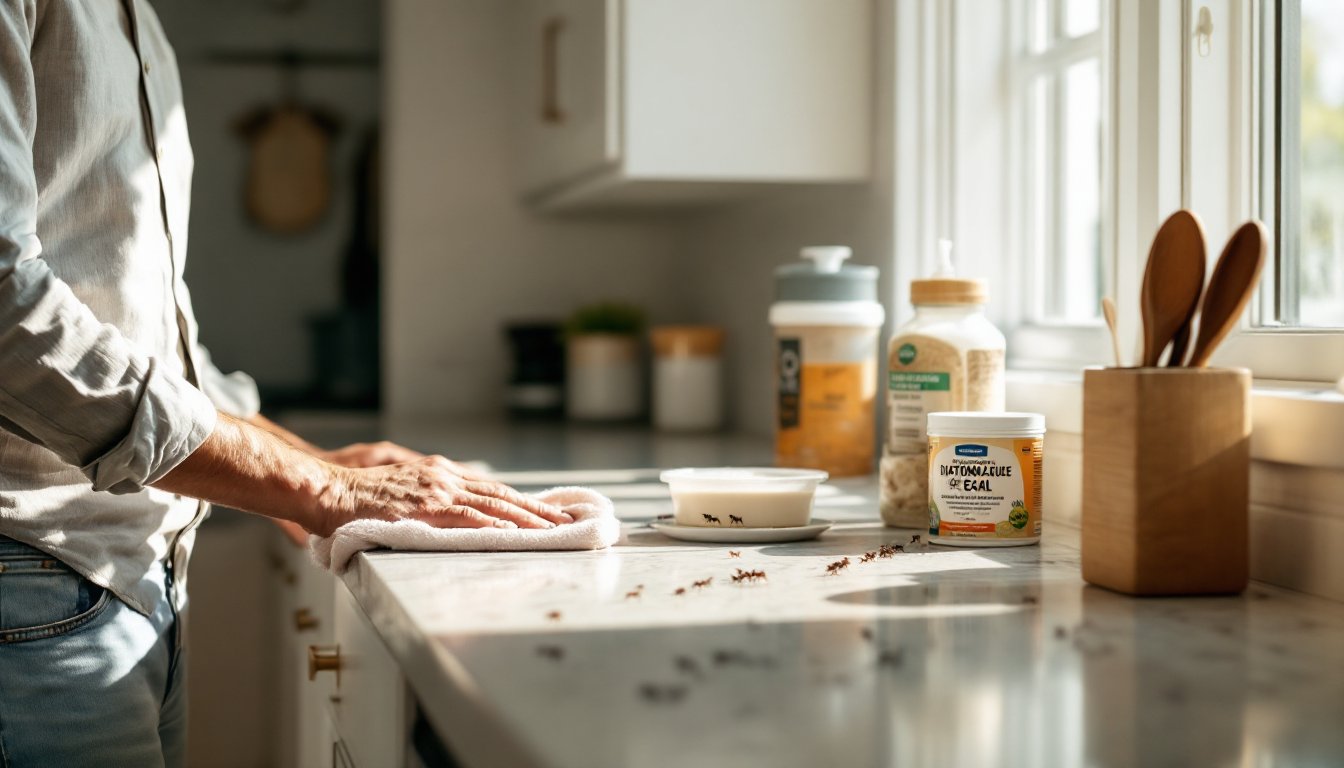
Finding ants marching across your kitchen counter or insects in your pantry is one of those homeowner moments that makes you want to scream. Ant and insect control doesn’t require calling in professionals right away, many infestations can be handled with smart tactics, the right materials, and a little patience. This guide walks you through identifying what you’re dealing with, tackling the problem yourself with proven methods, and setting up defenses that actually stick. Whether you’re dealing with a minor nuisance or a full-scale invasion, you’ve got options that fit your comfort level and budget.
Table of Contents
ToggleKey Takeaways
- Ant and insect control starts with identifying the pest type and removing food, water, and shelter—the three things that attract infestations to homes.
- Natural methods like food-grade diatomaceous earth and borax baits work for minor infestations, while sealing entry points is the most effective long-term prevention tactic.
- Carpenter ants, pharaoh ants, and pavement ants each require different treatment approaches, making proper identification essential before choosing a control method.
- Chemical ant baits kill colonies faster than DIY solutions but should never be sprayed near active baits, as it prevents workers from returning poison to the nest.
- Regular kitchen discipline, moisture control, and outdoor maintenance—keeping mulch away from foundations and sealing gaps—create lasting defense against future infestations.
- Call a professional pest control service if infestations persist after two weeks of DIY treatment, structural damage is suspected, or the problem spans multiple rooms.
Why Ant and Insect Infestations Happen in Homes
Insects and ants don’t just show up for fun, they’re looking for three things: food, water, and shelter. Your home offers all three. Crumbs left on counters, sticky floors, pet food bowls left out, and leaky pipes create an all-you-can-eat buffet that pests can’t resist. Cracks around windows, gaps under doors, and holes around utility pipes are highways straight into your walls and living spaces.
Seasons matter too. Spring and summer bring ants foraging in greater numbers, while fall pests seek warmth indoors before cold weather hits. Even small openings, we’re talking hairline cracks, allow ants to scout and establish colonies. Once a scout finds resources, it leaves a chemical trail (pheromone) that recruits hundreds more. This is why you’ll see them in a line rather than scattered randomly. Understanding this behavior is key to stopping them before the infestation grows.
Common Types of Household Insects and Ants
Not all ants are created equal, and different species require slightly different approaches. Carpenter ants are large, dark, and nest inside wood, they can damage structural framing if left unchecked. Pavement ants are smaller, black or brown, and typically nest outdoors but forage indoors for food. Pharaoh ants are tiny, yellowish, and thrive in warm, humid environments like bathrooms and kitchens. Each species has different triggers and weak points.
Other common household pests include cockroaches, which hide in dark, moist areas and reproduce rapidly: silverfish, attracted to starch and damp basements: fruit flies, which swarm around fermenting food: and pantry moths, which infest stored grains and dried goods. Identifying what you’re fighting matters because the treatment approach differs. A drain fly problem calls for cleaning drains: a carpenter ant issue might require removing affected wood or sealing entry points in the structure. Misidentifying the pest means wasting time and money on the wrong solution.
Natural and DIY Ant and Insect Control Methods
Non-Toxic Solutions for Indoor Use
If you prefer to avoid chemicals inside your home, several natural approaches work well for minor to moderate infestations. Diatomaceous earth (DE) is a fine powder made from fossilized diatoms: it damages the outer coating of soft-bodied insects and ants, causing dehydration. Food-grade DE is safe around pets and kids. Dust it lightly along baseboards, under sinks, and around entry points. Reapply after sweeping or mopping, and wear a dust mask when applying to avoid inhaling particles.
Borax bait traps are DIY-friendly and highly effective. Mix borax powder, powdered sugar, and water into a paste, then place small amounts on cardboard or in shallow containers near ant trails. Ants carry the mixture back to the colony, which kills the queen and workers over several days. Keep these away from pets and children, borax is toxic if ingested. You can also use cinnamon, peppermint oil, or citrus peels as deterrents: ants dislike strong smells. Place them in problem areas, though they’re better as prevention than as a cure for active infestations.
Sealing entry points is non-toxic and often the most effective long-term tactic. Caulk cracks around baseboards, window frames, and door thresholds with silicone or polyurethane caulk. Pay special attention to where pipes and electrical lines enter the home. Even if you don’t eliminate every ant, blocking their highways makes reinfestation much harder. Vacuum and wipe down surfaces regularly to remove food residue and scent trails that guide other ants indoors.
Chemical Treatments and When to Use Them
When DIY and natural methods aren’t cutting it, chemical treatments offer faster, more reliable results. Ant baits (commercial products like Terro or Amdro) contain slow-acting insecticide mixed with attractive bait. Ants eat the bait and carry it back to the nest, where it spreads through the colony. These work faster than homemade borax traps and are generally safer than broad-spectrum sprays. Place baits along ant trails and near entry points. Don’t spray near baits, it kills the workers before they can transport poison back to the nest.
Residual sprays kill on contact and create a barrier that repels future invaders. Products containing pyrethrin or pyrethroids are effective against most household insects. Always follow label directions, wear gloves and a mask, and ensure good ventilation. Spray along baseboards, under sinks, and around cracks, the places where you see activity. For cockroaches and other pests that hide in tight spaces, a crack-and-crevice treatment with a thin spray nozzle penetrates gaps better than a broad spray.
Professional-grade products sold to consumers (not just contractors) often outperform retail options, but they also require more care in application. Misuse of strong chemicals can harm your family or pets. Read every label, follow mixing instructions exactly, and respect re-entry times before occupying treated areas. If you’re uncomfortable handling chemicals or the infestation is severe, this is when calling a professional makes sense.
Prevention Strategies to Keep Pests Away Long-Term
Killing the current infestation is only half the battle. Prevention stops them from coming back. Start with kitchen and food storage discipline: wipe spills immediately, take trash out daily, don’t leave pet food out overnight, and store dry goods in airtight containers. Ants can’t forage if there’s nothing to eat.
Moisture control is equally important. Fix leaky pipes, ensure gutters drain away from the foundation, and use a dehumidifier in basements and crawl spaces. Many insects and ants are attracted to damp environments. Repair damaged window screens and weatherstripping, and install door sweeps on exterior doors. These barriers are cheap insurance compared to treating an infestation.
Outdoors, keep wood piles, mulch, and compost at least 3 to 4 feet away from the foundation. Trim tree branches and shrubs so they don’t touch the house, these create bridges for climbing insects and ants. Recent guides emphasize that expert tips on sealing entry points should be part of your year-round maintenance routine, not just a reaction to seeing bugs. Caulk gaps where utility lines enter the home each spring. These small habits, done consistently, dramatically reduce pest pressure.
When to Call a Professional Pest Control Service
Some situations demand professional attention. Carpenter ant infestations that have damaged framing require more than baits, a licensed pest control technician can identify the nest, assess structural damage, and apply targeted treatments inside walls. Termite suspicions absolutely warrant a professional inspection: termites cause thousands in damage, and most homeowner treatments fail because the colony is hidden deep in wood.
If an infestation persists after two weeks of consistent DIY treatment, or if the problem is widespread across multiple rooms, professionals have access to stronger products, equipment (like infrared cameras to locate hidden nests), and expertise that DIY methods lack. They can also identify entry points and conducive conditions you might miss. Get quotes from at least two licensed local companies and verify they’re insured. A good pest control service isn’t cheap, expect $200 to $500+ for an initial inspection and treatment, but it beats years of battling a persistent problem on your own.
Final Thoughts: A Proactive Approach Wins
Ant and insect control is about layers: remove food and water sources, seal entry points, apply the right treatment for what you’re facing, and maintain preventive habits. Start with the simplest, safest approach for your situation. Many homeowners resolve mild infestations with caulk, baits, and good housekeeping alone. Keep your eyes open in spring and fall, these peak pest seasons are when early action prevents small problems from becoming big ones. You’ve got this.