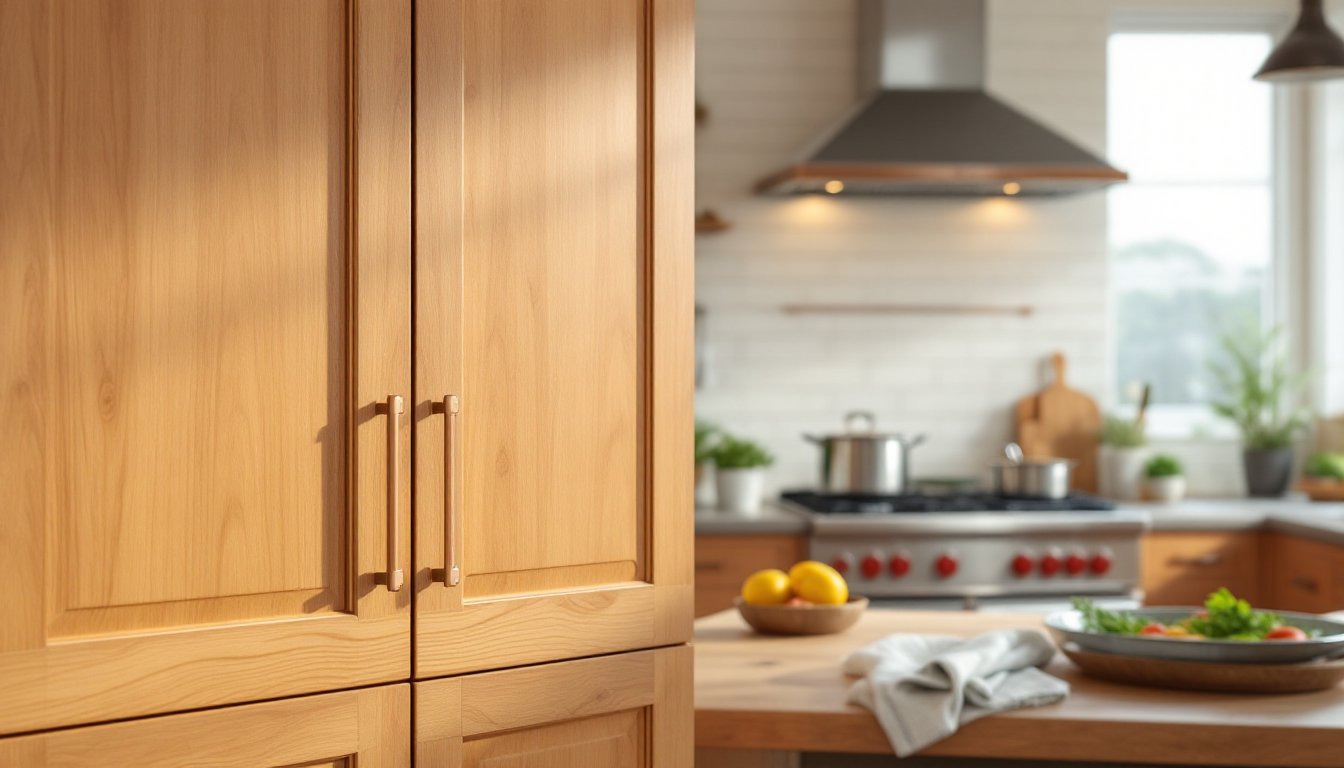
When you’re planning a kitchen renovation, solid wood cabinets almost always land on the wish list, but the sticker shock can pull you back down to earth. Before you settle for particle board or melamine, it’s worth understanding what you’re actually getting with solid wood. Unlike veneered plywood or budget-friendly alternatives, solid wood cabinets offer durability, repairability, and long-term value that compound over decades. Whether you’re a hands-on DIYer looking to refinish your existing cabinets or a homeowner evaluating new ones, this guide walks you through what solid wood brings to the table, how to budget for it, and what to expect in terms of maintenance.
Table of Contents
ToggleKey Takeaways
- Solid wood kitchen cabinets offer superior repairability and longevity compared to veneered, particle board, or MDF alternatives, allowing dents and water damage to be sanded and refinished rather than replaced.
- Custom solid wood cabinets cost $150–$400+ per linear foot, making a 12-foot kitchen renovation $1,800–$15,000 or more, but the investment pays dividends over 20+ years through durability and resale value.
- Wood species selection matters: maple and white oak suit modern kitchens and resist moisture, while cherry works for traditional spaces and alder is budget-friendly for painted cabinets.
- Solid wood cabinets naturally expand and contract with humidity changes, so proper ventilation, moisture control, and hinge maintenance every 1–2 years prevent warping and sagging.
- Daily care with a damp microfiber cloth, prompt spill cleanup, and avoiding harsh cleaners or standing water keeps solid wood kitchen cabinets looking fresh for 30+ years.
- Refinishing existing solid wood cabinets ($500–$1,500) is a cost-effective alternative to full replacement if the structure is sound, or you can mix solid wood in visible areas with stock options elsewhere to manage budget.
What Makes Solid Wood Cabinets Different
Solid wood cabinets are constructed with actual wood throughout the frame, sides, and doors, as opposed to composite materials bonded to a wood veneer or frame. The cabinet box itself is built from solid wood stiles, rails, and panels, while the backing and shelving may be plywood (a solid-wood ply) or hardboard, depending on the construction quality.
Solid Wood vs. Plywood and Veneer Options
Solid wood offers the most repair flexibility. A dent, gouge, or water damage can often be sanded, stained, and refinished in place. You’re not dealing with a veneer layer that can peel or a substrate that swells beyond recovery.
Plywood cabinets use a veneered hardwood face bonded to a plywood substrate. They’re lighter, more affordable, and less prone to wood movement. But, once the veneer is damaged, particularly at edges or joints, repair becomes difficult or impossible. The structural integrity is solid, but cosmetic damage is often permanent.
Particle board and MDF (medium-density fiberboard) are budget options common in flat-pack cabinets. They’re dimensionally stable and accept stain well, but they don’t hold screws reliably long-term, can’t be sanded out of damage, and swell irreversibly if exposed to moisture. They’re fine for rental properties or temporary installations, not for a kitchen where humidity is constant.
Solid wood naturally absorbs and releases moisture with seasonal humidity changes, which means your cabinet doors may require periodic hinge adjustment or very slight planing over decades. That’s not a defect, it’s wood being wood. Veneered and composite options avoid this, but they trade repair flexibility for stability.
The Benefits of Choosing Solid Wood
Longevity and repairability are the headline benefits. A solid wood cabinet that develops a water ring, a burn mark from a hot pan, or a dent can be refinished. A water-damaged veneer or particle board cabinet typically requires replacement. Over a 20-year window, that difference adds up in dollars and waste.
Aesthetic control is another advantage. If you get tired of the original stain color, you can sand and restain solid wood cabinets in a weekend with basic tools. Try that with veneer and you risk peeling or blotching. Many homeowners find this flexibility invaluable, your kitchen style doesn’t have to be locked in place.
Structural integrity in load-bearing applications matters. If you’re hanging heavy cookware, appliances, or shelving beyond standard depth, solid wood carries the load more reliably. Particle board shelves sag over time under weight: solid wood or quality plywood holds its shape.
Resale value typically improves with solid wood kitchens, especially in mid-to-high-end homes. Solid wood signals quality and longevity to buyers. A kitchen with particle board cabinets, even if new, often reads as “temporary” or “budget,” which affects perception.
That said, solid wood cabinets demand more attention. They’ll cup, warp slightly, or show wood movement if humidity swings wildly or if they’re exposed to direct sunlight or heat. Proper kitchen ventilation, using your range hood and keeping moisture under control, keeps issues minimal.
Popular Wood Types for Kitchen Cabinets
The wood species you choose affects color, grain pattern, durability, and cost.
Oak (red or white) was the standard cabinet wood in the 1980s and 1990s. It’s durable, affordable, and has a prominent, dramatic grain. The downside: that grain can feel dated, and it stains unevenly if prep work isn’t meticulous. White oak resists moisture better than red oak.
Maple is hard and fine-grained, taking stain and paint beautifully. It’s more forgiving than oak for even staining and works well for modern, transitional, or painted finishes. It costs more than oak and is a favorite for higher-end custom cabinets.
Cherry offers warmth and a darker, richer tone that mellows over time as UV light fades it slightly. It’s moderately priced between maple and premium species, durable, and works well for traditional and rustic kitchens. Cherry’s downside is that it shows dust easily and the color shift over time can be unexpected if you’re not aware it happens.
Walnut and hickory are premium options. Walnut is dark and elegant but very expensive and less stable in humidity swings. Hickory is extremely hard and has dramatic color and grain variation, ideal for rustic styles, but the price is steep.
Alder is a softer hardwood, lighter in color, and budget-friendly. It’s typically used for painted cabinets because the softer grain doesn’t showcase as naturally. It dents more easily than harder woods but is entirely workable for DIY refinishing.
For kitchen cabinets, harder woods, maple, oak, cherry, and walnut, hold up better to daily use and small bumps. Softer woods like alder are fine if you’re painting and willing to accept light cosmetic wear.
Cost Considerations and Budgeting
Solid wood cabinets cost more upfront, but the math improves over time.
Custom solid wood cabinet runs from $150 to $400+ per linear foot (the length along your walls) depending on wood species, door style, hardware, and finish. A 12-foot galley kitchen could cost $1,800 to $4,800 just for base and wall cabinets, not including island or tall pantry cabinets. Add hardware, installation, and backsplash, and you’re looking at $5,000 to $15,000 or more for a full renovation.
Semi-custom solid wood (pre-designed, stock-height options with customizable dimensions) runs $80 to $200 per linear foot, still solid wood, but factory-made with less flexibility. This lands in the $1,000 to $3,000 range for a small to mid-size kitchen.
Stock veneered or plywood cabinets run $40 to $100 per linear foot, accessible for tight budgets, but the trade-off is durability and repair options.
Regional pricing varies significantly. Urban areas and regions with higher wood sourcing costs will skew higher. Material market fluctuations also affect pricing year to year, so get current quotes rather than assuming 2023 numbers apply in 2026.
One budget strategy: mix solid wood where it matters (base cabinets and visible doors) and accept veneered or stock options for open shelving or pantry interiors. Another approach is to refinish existing solid wood cabinets if they’re structurally sound but cosmetically tired, a $500 to $1,500 refinish project beats a $10,000 replacement.
Don’t forget labor costs. Installation runs $100 to $200 per linear foot if you hire a professional, or you can DIY if your kitchen layout is straightforward. Finish work (sanding, staining, or painting) is labor-intensive: budget accordingly if you’re doing it yourself.
Maintenance and Long-Term Care
Solid wood cabinets reward consistent, gentle care.
Daily cleaning should use a damp microfiber cloth and mild dish soap. Avoid soaking doors or letting water sit in seams. Dry immediately after wiping. This prevents water from being absorbed into the wood grain, which can cause swelling or finish breakdown.
Spill response matters. If you spill something acidic (lemon juice, wine, vinegar) or sugary, wipe it immediately. These substances can etch or discolor the finish if left to dry. Oil and grease should also be cleaned promptly, they can build up and dull the finish over time.
Humidity control is non-negotiable. Wood expands when relative humidity is high and contracts when it’s low. A humidifier in winter (if your home is very dry) and a dehumidifier or exhaust fan in summer (to handle cooking moisture) keep wood movement minimal. Most kitchens benefit from running the range hood during and 10 minutes after cooking.
Refinishing and touch-ups keep cabinets looking fresh. Surface scratches and minor dents can be waxed or touched up with stain markers. Every 5 to 10 years (depending on finish type and kitchen use), cabinets may need a refresh coat of polyurethane or other topcoat to maintain protection. A full sand-and-restain project is optional, you’re doing it for aesthetics and updated protection, not because the cabinets are failing.
Hardware maintenance is often overlooked. Tighten hinges and drawer slides every 1-2 years. Hinges that loosen cause doors to sag, which puts strain on the wood joints. Replacing a worn hinge is cheap and easy: straightening a sagging cabinet frame is not.
Avoid using harsh cleaners like bleach, ammonia, or abrasive scouring powders. These strip finish and can discolor wood. Mineral oil-based wood cleaners are okay for occasional deep cleaning but can build up over time: use sparingly.
With basic care, prompt cleanup, humidity management, and occasional hardware checks, solid wood cabinets easily last 30+ years and often look better at year 15 than plywood cabinets do at year 5. The investment compounds.
Conclusion
Solid wood kitchen cabinets are a long-term bet. They cost more initially, demand slightly more care, and require a different mindset than “install and forget.” But if you plan to stay in your home and value repairability, aesthetic flexibility, and durability, they’re worth it. Start by defining your budget, choosing a wood species that matches your design and lifestyle, and committing to basic maintenance. Your kitchen will thank you in 20 years.