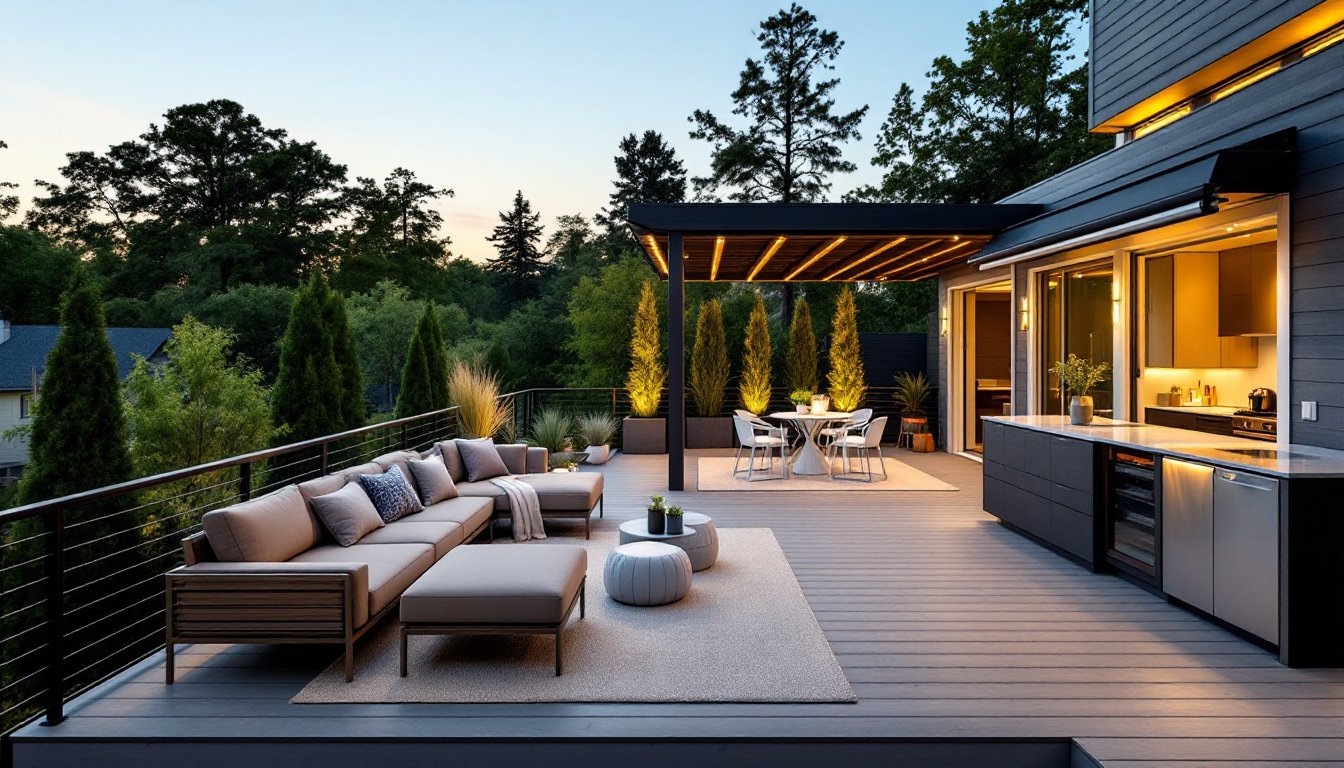
A second story deck doesn’t just add square footage, it reclaims your roofline as a genuine living space. Whether you’re perched above the trees or overlooking your neighborhood, an upper-level deck creates separation from ground-level foot traffic and opens views that ground-floor patios can’t touch. In 2026, homeowners are moving beyond cookie-cutter designs and embracing decks that balance modern aesthetics with durability. This guide covers contemporary styles, material strategies, smart layouts, and finishing details that’ll help you build a second story deck you’ll actually use, not just admire from inside.
Table of Contents
ToggleKey Takeaways
- A second story deck adds usable outdoor space without the cost and complexity of a full room addition while providing elevation, better views, and a genuine retreat above ground-level sightlines.
- Minimalist aesthetics with hidden fasteners, composite materials in muted tones, and glass railings create modern appeal, while industrial designs embrace exposed elements and mixed materials like steel with wood.
- Premium composite decking offers minimal maintenance and color retention over 10+ years, but costs 30–50% more than pressure-treated wood; proper underuttering with metal flashing and drip edges is essential to prevent water damage.
- Define compact deck zones using level changes and pergolas rather than walls, keeping lounge areas to 10′ × 12′ and dining spots around 10′ × 10′ to maximize functionality without clutter.
- Recessed LED lights, warm-white strings, and sconces transform a second story deck into an evening retreat, while wind-tolerant container plants, outdoor rugs, and pergolas add finishing touches that make the space intentional and inviting.
- Local building codes require rail heights of 36–42 inches and balusters spaced so a 4-inch sphere cannot pass through; cable systems and horizontal metal pickets provide modern aesthetics while meeting safety requirements.
Why Second Story Decks Are the Ultimate Home Upgrade
A second story deck adds usable square footage without the cost and complexity of a full room addition. You’re working with existing roof framing, which means faster construction, fewer permits in some jurisdictions, and immediate ROI compared to an interior remodel.
Beyond numbers, elevation matters. A deck at second-story height puts you above sightlines, creating a genuine retreat. Wind is better up there too, evening breezes feel less stagnant than at ground level, and you’re away from insects and ground-level noise. Structurally, you’ll need to verify that existing roof framing can carry the added load. Most modern framing is adequate, but older homes or those with complex roof lines may require an engineer’s review and reinforcement.
The design opportunity is real. Ground-level decks often get squeezed into leftover backyard space: second story decks sit on a clean canvas. You can orient the layout toward the best views, position shade where it matters most, and create distinct zones without fighting existing landscaping or underground utilities.
Contemporary Design Styles for Upper-Level Decks
Minimalist and Clean-Line Aesthetics
Minimalist decks strip away ornament and emphasize material honesty. Think low-profile railings with hidden fasteners, composite boards in muted grays and charcoals, and uncluttered sightlines. The railing itself becomes design: steel cables stretched between posts, glass panels for unobstructed views, or horizontal metal pickets that feel modern without visual heaviness.
Materials reinforce the look. Composite decking in cool tones (grays, soft blacks, weathered-looking finishes) maintains clean lines over seasons without the maintenance burden of pressure-washing weathered wood. Pair this with steel or aluminum railings, powder-coated matte finishes work better than shiny chrome, and you’re solidly in contemporary territory. Minimal planters in a tight color palette (concrete, dark metal) keep landscaping from cluttering the view.
Industrial and Mixed-Material Approaches
Industrial decks embrace visible fasteners, mixed materials, and a slightly raw aesthetic. Pressure-treated wood or reclaimed-look composites pair with steel support beams left exposed and powder-coated rather than hidden. A metal pergola overhead, blackened steel or weathering steel that develops a rust patina, reads as intentional design, not an afterthought.
Materials are the story here. Concrete pavers mixed with wood boards, steel railings paired with rough wood accents, and lighting fixtures that show their hardware create visual interest without excess. An industrial deck often performs double duty: part lounge space, part outdoor kitchen or bar area. Layering textures, smooth composite, rough stone, smooth metal, keeps the eye moving. Open shelving built from steel angle iron and wood shelves, for example, serves both storage and design function. This approach works exceptionally well for urban rooftop situations where the surrounding architecture is angular and functional.
Smart Material Choices for Durability and Style
Material selection is where style meets longevity on a second story deck. Wood, pressure-treated lumber, cedar, or tropical hardwoods, offers warmth but demands ongoing maintenance: sealing every 2–3 years, seasonal checking, and susceptibility to rot if water pools. Pressure-treated pine is affordable but can warp: hardwoods like ipe are dense and rot-resistant but harder to work with hand tools and more expensive.
Composite decking (wood fiber and plastic polymer blend) has matured significantly. Brands vary widely in durability, color retention, and repairability. Premium composites resist staining, don’t splinter, and hold color for 10+ years with minimal maintenance, a hose-down annually is usually enough. Cap boards (solid composite covering board edges) prevent water infiltration. The trade-off: upfront cost is 30–50% higher than pressure-treated wood, and some installers prefer them for high-visibility spots rather than the entire deck.
For railings and structural elements, aluminum and steel dominate modern designs. Aluminum is lightweight, corrosion-resistant, and paintable in any color. Steel is stronger and reads more substantial, but requires powder coating (applied finish, not paint) to prevent rust, an important distinction on coastal or humid properties. Glass or transparent panels provide unobstructed views: if budget allows, tempered glass is the code-compliant choice for safety.
Underuttering, the material or system beneath the deck boards, matters for second story decks more than ground-level builds. Water intrusion degrades the structure below. Metal flashing over roof joists, drip edges along fascia, and proper sloping toward gutters aren’t cosmetic: they’re structural insurance. Don’t skip this step even if it adds cost.
Maximizing Your Space: Layout and Functional Zones
Second story decks are compact by nature, so zones matter. A typical 12′ × 16′ deck might include a lounging area, a dining spot, and a plant buffer. Define these zones without walls, use level changes (one step up or down), shifts in decking direction, or a pergola overhead to signal transition.
Lounge areas need minimal depth: a seating arrangement with side tables requires roughly 10′ × 12′. Dining works in a 10′ × 10′ footprint if you choose a round or square table: rectangular tables eat more space. A bar or beverage station (a 2-foot-deep counter running 4–5 feet) adds functionality without dominating the layout. Locate it near the deck door if possible, for easy kitchen access.
Plant zones, containers, planters, or a living wall system, soften the space and screen views you want to hide. A row of tall planters creates a visual buffer without blocking breeze or views. Choose planters that match your aesthetic: concrete cubes for minimalist schemes, dark metal or wood for industrial looks. Match 2–4 plant containers in color and material: variety reads cluttered at this scale.
Rail height must meet local code, typically 36–42 inches from deck surface, and balusters (the vertical pickets) must not allow a 4-inch sphere to pass through, per the International Residential Code (IRC). This is a hard requirement and impacts design. Horizontal cable systems work beautifully but need careful spacing: horizontal metal pickets offer a cleaner view than vertical. Wide-spaced posts (6 or 8 feet apart) and clean sight lines make a compact deck feel larger.
Lighting, Landscaping, and Finishing Touches
Lighting transforms a second story deck from daytime-only to an evening retreat. Recessed lights in the deck boards create a floating effect, especially on composite material where fasteners hide. Low-voltage LED strings overhead (not high-visibility party lights, but warm-white subtle lines) are minimalist and code-compliant. Wall-mounted sconces flanking the deck door or posts mounted at railing height provide task lighting without throwing light everywhere.
Paths matter: small recessed or bollard lights leading from the deck door back to seating signal safety and create ambiance. LED technology means low power draw and no heat buildup, important on a deck where you’re close to overheating surfaces. Avoid mixing warm and cool color temperatures, pick either 2700K (warm, incandescent-like) or 3000K (neutral), and stick with it.
Plant selection is performance-driven. Potted plants in windy rooftop conditions need wind-tolerant species: ornamental grasses, sedums, compact conifers. Soil in containers dries faster at elevation: drainage holes are non-negotiable, and you’ll water more frequently than ground-level gardens. Group containers by water needs to simplify care. Tall narrow plants (grasses, columnar junipers) offer screening and visual interest without blocking views. The landscape design inspiration from Gardenista showcases how thoughtfully chosen plants create layers even in compact spaces.
Finishing touches separate a finished deck from an unfinished one. A built-in bench along one side creates seating, adds storage, and feels intentional. Outdoor rugs (marine-grade polypropylene, not regular indoor rugs) anchor the lounge zone and soften hard surfaces. Outdoor cushions in solid colors tie to your material palette. Consider shade: a retractable awning gives flexibility, or a pergola overhead provides dappled light and a visual ceiling that makes the space feel intentional, not just tacked on. Decor inspiration from Dwell demonstrates how modern homes approach outdoor spaces as extensions of interior design, not afterthoughts. Finally, screens or privacy panels on the sides prevent that exposed-on-a-roof feeling. Horizontal slat screens feel contemporary, semi-transparent, and less fortress-like than solid walls.