When it comes to replacing a refrigerator, most homeowners focus on capacity and price, but KitchenAid refrigerator models offer something more. These units combine thoughtful engineering with professional-grade cooling performance, making them a solid investment for kitchens that handle serious cooking and entertaining. Whether you’re drawn to the sleek appeal of a black KitchenAid refrigerator, the modern look of a black stainless steel refrigerator, or the flexibility of multiple model options, understanding what sets these appliances apart helps you make a confident buying decision. This guide walks you through the key features, performance metrics, and practical considerations you’ll need to evaluate before bringing one into your kitchen.
Table of Contents
ToggleKey Takeaways
- KitchenAid refrigerator models prioritize quiet operation, precise temperature control, and independent cooling zones that prevent produce from drying out while deli meats freeze.
- Multiple finish options including black stainless steel refrigerator coatings are engineered to resist fingerprints and maintain appearance with standard cleaning, addressing long-term satisfaction.
- Counter-depth designs and French-door configurations available in KitchenAid refrigerator lines improve accessibility and fit flush with cabinetry for better kitchen aesthetics and traffic flow.
- Manual humidity sliders in crisper drawers and climate-controlled compartments reduce food spoilage by letting you dial in optimal conditions for different produce types and items.
- KitchenAid models operate efficiently at 600–750 kWh annually (roughly $56–$70 per year), while inverter compressors on premium models improve both efficiency and quietness.
- Careful measurement of your kitchen space (accounting for door swing and cabinet clearance) and realistic capacity assessment (18–25+ cubic feet depending on household size) are essential before choosing your KitchenAid refrigerator.
What Sets KitchenAid Refrigerators Apart
KitchenAid brings professional kitchen heritage to residential appliances, and it shows in the details. Unlike commodity refrigerators, KitchenAid black stainless refrigerator finishes and standard stainless models prioritize quiet operation, precise temperature control, and thoughtful storage architecture. The brand focuses on consistency in cooling performance across all zones, a common weak point in budget models where the bottom shelves cool differently than upper compartments.
One distinguishing factor is KitchenAid’s emphasis on air handling and humidity control. Most units use separate cooling zones with independent damper controls, meaning your fresh produce doesn’t dry out while your deli meats freeze over. The compressor and evaporator design reduces vibration noise, which matters if your kitchen is open to living spaces. Build quality shows up in cabinet construction and door seals: hinges and latches are solid rather than plastic-heavy, translating to longer lifespan and reliable performance over a decade or more.
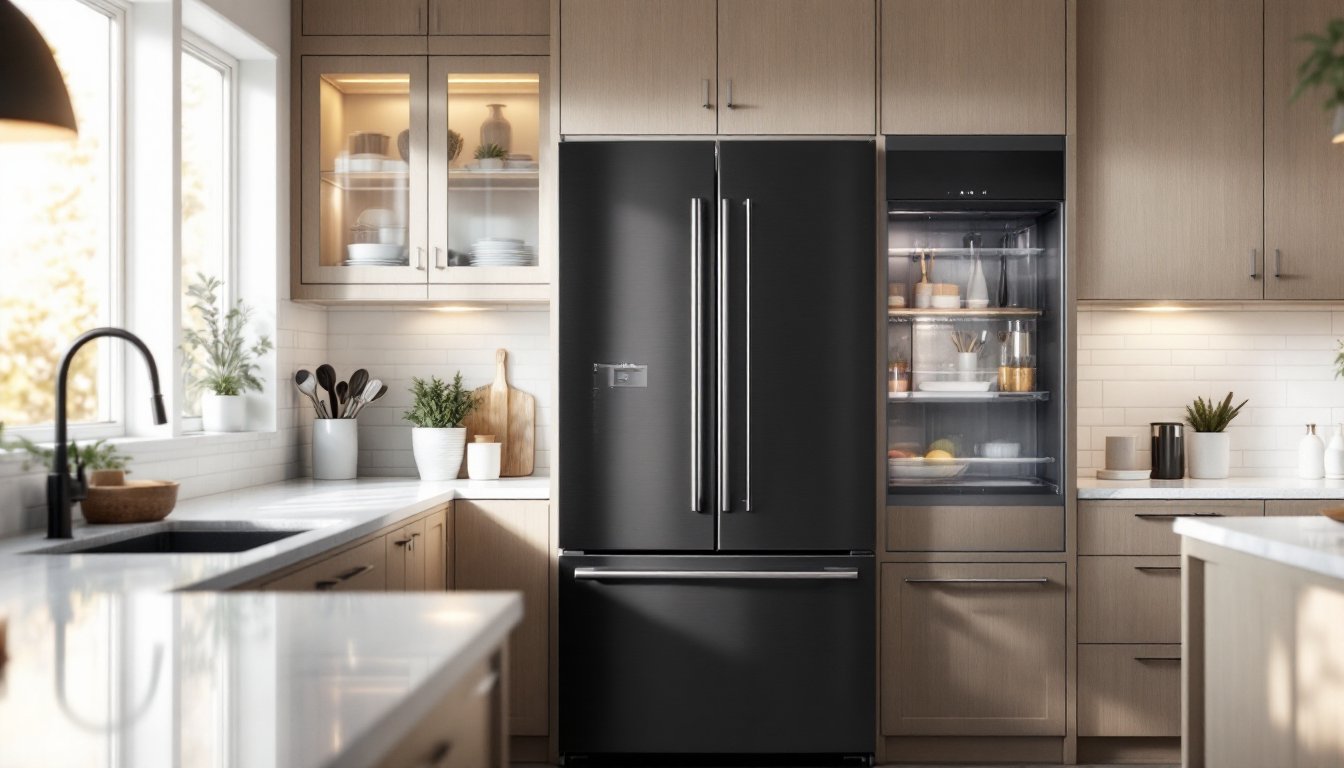
Finish options, including the popular black KitchenAid refrigerator and black stainless steel refrigerator variants, aren’t just cosmetic. The coatings are designed to resist fingerprints and maintain appearance with standard cleaning, an important practical feature since refrigerator doors get touched constantly. Brushed finishes hide smudges better than polished ones, and that matters for long-term satisfaction.
Key Features and Design Highlights
Most KitchenAid refrigerator model options come with a suite of modern conveniences that justify their premium positioning. LED interior lighting is standard, it uses less energy than older halogen bulbs and produces cleaner light for inspecting contents. Adjustable shelving and modular storage containers give you flexibility as household needs shift. Electronic temperature controls let you fine-tune cooling for different compartments, a feature absent in many mid-range competitors.
Counter-depth designs available in several kitchen aid refrigerator models align your appliance flush with cabinetry, creating clean sightlines and easier traffic flow in smaller kitchens. French-door configurations are common, offering easier access to fresh food zones without opening a large, energy-guzzling single door. Refrigerator-only models exist for kitchens with separate freezers or wine coolers, expanding layout flexibility.
Storage Organization and Interior Layout
Interior layout is where KitchenAid models distinguish themselves most noticeably. Crisper drawers feature manual humidity sliders rather than fixed vents, letting you dial in conditions for leafy greens, root vegetables, or delicate berries. This level of control reduces spoilage, a problem homeowners overlook until they notice wilted lettuce two days after shopping.
Door storage is engineered with proper height gradations: taller shelves for bottles, adjustable racks for smaller items, and deli compartments with dedicated cooling. Freezer compartments use pull-out drawers or baskets rather than a single deep cavity, cutting down on lost items hiding in back corners. Climate-controlled drawers on premium models hold deli meats, cheeses, or beverages at near-freezing temps without actually freezing them, extending shelf life significantly. The layout of KitchenAid units, translated for home use. This practical thinking reduces wasted food and simplifies meal planning.
Performance and Efficiency Considerations
Energy efficiency in refrigerators is measured by annual kilowatt-hour consumption (kWh/year) and published on the EnergyGuide label. KitchenAid models typically range from 600 to 750 kWh annually depending on size and feature set, solid middle ground, neither among the absolute most efficient nor excessive. For a rough estimate, assume 8–10 cents per kWh in most US regions: a model using 700 kWh costs roughly $56–$70 annually to operate.
Temperature stability matters more than you’d expect. Professional lab testing shows that KitchenAid refrigerators maintain tight temperature control with minimal fluctuation, crucial for preserving food quality and safety. Compressors run efficiently, cycling on and off rather than running continuously, which extends equipment lifespan and reduces noise. Inverter compressors, available on premium KitchenAid black stainless steel refrigerator and other high-end models, adjust cooling output to demand, improving both efficiency and quietness.
Ice and water dispensing (where included) uses filtered water, eliminating the need for pitcher filters. The filtration system requires replacement every 6–12 months, a consumable cost to factor into ownership. These water systems rarely fail, but when they do, repair isn’t simple, part of why some DIY homeowners prefer models without them.
Choosing the Right Model for Your Kitchen
Selecting among kitchen aid refrigerator models comes down to matching capacity, layout, and finish to your kitchen architecture and usage patterns. Measure your opening carefully: wall-to-wall dimensions, including any trim or molding, then account for cabinet sides and door swing clearance. A 36-inch-wide refrigerator needs more than 36 inches of space, standard allowance is 37 to 38 inches. Height matters equally: note ceiling height, light fixtures, and cabinet soffits above. Counter-depth models run 24–25 inches front-to-back, while standard models stretch 30–33 inches, a significant difference in cramped kitchens.
Capacity needs vary by household. A family of four typically needs 20–24 cubic feet: couples might satisfy with 18 cubic feet. Larger families or frequent entertainers should consider 25+ cubic feet. French-door models (popular in black KitchenAid refrigerator and black stainless refrigerator lines) sacrifice some freezer depth for fresh-food accessibility, a reasonable trade if you freeze fewer bulky items.
Finish selection isn’t frivolous. Black stainless steel refrigerator finishes hide smudges and fingerprints better than polished stainless, reducing maintenance. Matte black finishes look contemporary but require more frequent wiping. Stainless options coordinate with most appliance suites. Reviews and real-world testing: models that frustrate users daily through poor ergonomics won’t deliver satisfaction even though good lab performance. Read user feedback focused on ice dispensing reliability, shelf stability, and ease of accessing back corners, practical issues that emerge after a few months of use.
Installation, Maintenance, and Long-Term Care
Delivering and positioning a refrigerator requires careful planning. These units weigh 300–400+ pounds: older homes with tight doorways, staircases, or narrow hallways may demand professional installation or even temporary removal of doors. White-glove delivery services cost extra but remove unpacking, positioning, and old-unit haul-away stress.
Once positioned, allow 24 hours before plugging in if the unit was transported horizontally, this gives coolant time to settle. Level the refrigerator front-to-back using the adjustable feet: doors should close on their own without sliding. Check water line connections if your model includes icemakers or dispensers: copper or plastic tubing connects to a shutoff valve under the sink. Test thoroughly for leaks before running.
Maintenance is straightforward but essential. Clean the condenser coils (on the back or bottom, typically) every 6–12 months using a brush or vacuum, dust accumulation forces the compressor to work harder, reducing efficiency and lifespan. Replace door seals if they harden or crack (usually a $50–$150 DIY swap). Interior cleaning requires only mild detergent and soft cloths: avoid harsh chemicals. Filters for water dispensers need changing per manufacturer guidance, typically yearly. Service calls for compressor or electrical issues run $150–$300 for diagnosis plus repair costs: many homeowners budgeted for this once during a 15-year ownership period.
The manufacturer warranty typically covers 1 year for parts and labor, with compressor coverage extending to 5–10 years. Extended warranty plans exist but evaluate whether they match your risk tolerance, many homeowners self-insure after the initial term ends.
Conclusion
A KitchenAid refrigerator represents a middle-to-premium investment in a space that anchors daily family life. Careful measurement, realistic assessment of capacity needs, and honest evaluation of finish preferences lead to choices you’ll live happily with for a decade. Don’t prioritize aesthetics alone, performance, storage logic, and reliability matter as much as whether you prefer a black stainless steel refrigerator or polished finish. Research specific models before committing, verify installation logistics, and budget for basic maintenance. The result is a kitchen appliance that works hard without demanding attention.